
Data Annotation & AI Training Data Services
Human-in-the-loop data work that makes AI models worth deploying.

What we run for AI data services teams.
Where this sector hurts
- Models that pass every offline benchmark and then break on real-world inputs the training set never contained.
- Annotation volume tripling in a quarter while label consistency quietly drifts.
- No independent human review layer, so bias and unsafe outputs reach production before anyone catches them.
- Regional language and dialect data that simply doesn't exist in any dataset you can buy.
The Cimmons Solution
A model is only as good as the judgement in its training data. That's the part vendors gloss over: labeling isn't data entry. Deciding whether a frustrated customer's "fine, whatever" is resolved or escalated-and-lost is a judgement call, and someone who has never handled that call will get it wrong at scale.
Cimmons came to AI data work from the other direction. We run live support floors — 356+ people on voice and non-voice operations in Bengaluru for 25+ clients — so the people annotating your conversational data have taken those conversations. For intent taxonomies, support-dialogue RLHF, sentiment and escalation labeling, that experience is the product. Pure-play annotation shops staff for throughput; we staff for judgement and then build throughput on top.
The rest is the full pipeline you'd expect. We generate raw multilingual voice and image-prompted speech data where none exists, label text, image, video and audio to versioned guidelines, and sit as an independent human-in-the-loop layer scoring model output before it ships. All of it inside ISO 9001:2015 and ISMS 27001:2013 controls, in access-controlled environments your data doesn't leave.
Review runs a second independent pass on every batch — disagreements are adjudicated against versioned guidelines before anything ships.
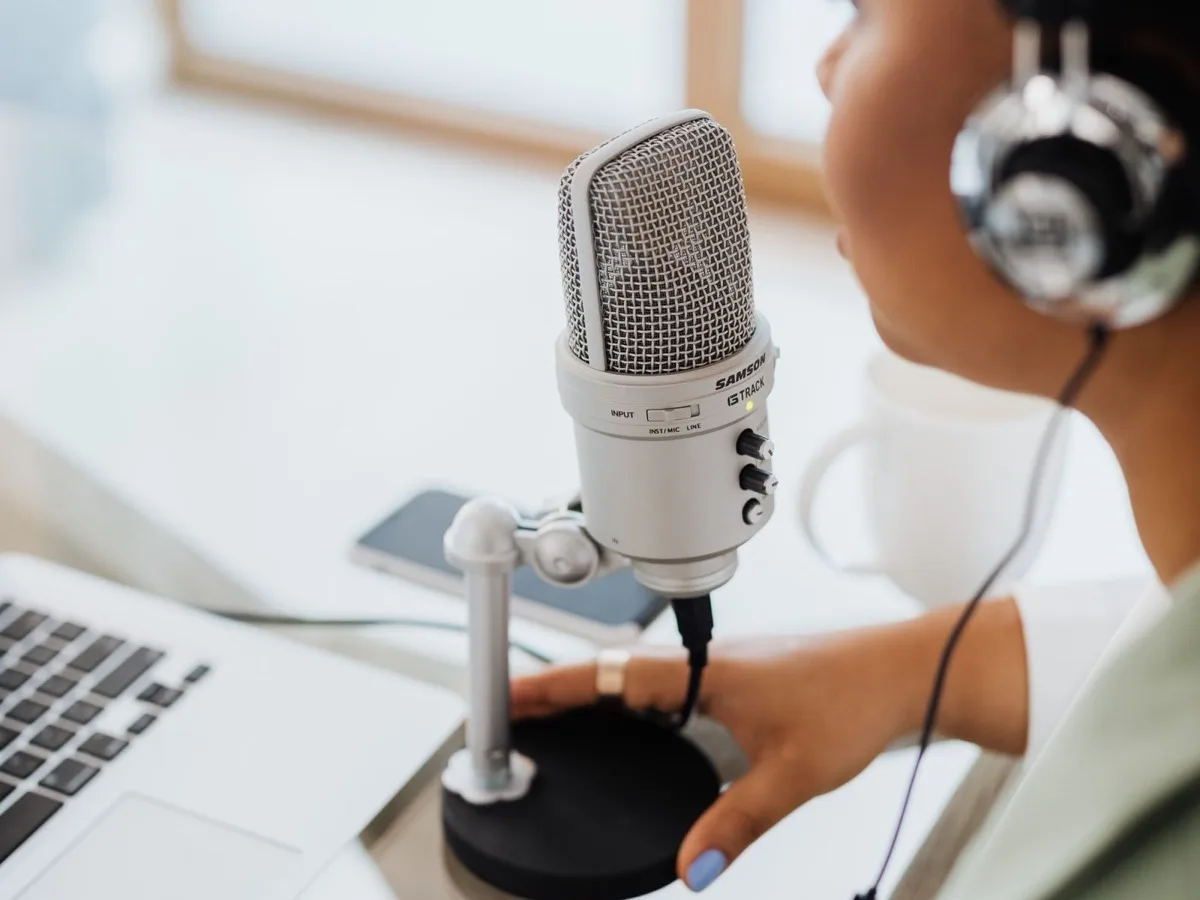
Consented voice data, recorded to your spec.
No dataset vendor has your specific support scenarios, your regional dialects, or your users’ conversational patterns. We record it — natural conversational voice, image-prompted speech, and simulated support interactions, with documented consent and demographic spread — built to the language and use case your model actually needs.
What each one covers.
- NER
- Intent
- Sentiment
- Bounding box
- Segmentation
- Keypoints
- Frame tracking
- Object ID
- Action tags
- Transcription
- Diarization
- Emotion
Sourcing data that doesn't exist yet
Buying a dataset only works if someone has already built one. When they haven't — regional dialects, your specific support scenarios, edge cases your users hit and your logs missed — we record it. Consented collection, documented demographic spread, delivered to your spec.
- Conversational & dialect voice recording
- Image-prompted speech & scenario capture
- Support-conversation simulation
Labeling across every modality you train on
Text, image, video, audio — one vendor, one set of guidelines, one QA standard. Annotators train against golden datasets before they touch production data, and every label decision traces back to a written rule rather than a judgement call someone made on a Tuesday.
- NER, intent & sentiment classification
- Bounding box, polygon & keypoint labeling
- Transcription, diarization & emotion tagging
Independent human review of model output
The checkpoint between "the model responded" and "we shipped that response". We score outputs against your guidelines, flag toxicity and bias, and feed structured preference data back into training. Being outside your team is the point — we have no reason to grade generously.
- Output accuracy & preference scoring
- RLHF & reinforcement feedback
- Toxicity, bias & brand-safety audit
Find the right starting point.
Flexible models for every stage.
Fixed-scope delivery
A defined target — 50,000 labeled images, 200 hours of transcribed audio — with an agreed accuracy threshold and delivery date. Best when the work is bounded and you want a number on it.
Dedicated AI ops team
A ring-fenced team that works inside your tooling and your guidelines, on your sprint rhythm, scaling up as volume grows. Best when annotation is continuous rather than a project.
Independent QA layer
You generate or auto-label; we grade. We score, filter and adjudicate before anything enters training. Best when speed comes from automation and the risk you're managing is quality.
The guardrails that come as standard.
- Double-pass human review with documented adjudication — inter-annotator agreement measured and reported, not assumed
- Consent-based collection with documented demographic, language and dialect coverage
- ISO 9001:2015 quality management and ISMS 27001:2013 information security, with access-controlled delivery environments
- Versioned annotation guidelines — every label traces to a written rule, so relabeling on a spec change is a re-run, not a rebuild
Where else we run this kind of team.
AI Data Services FAQs
What types of data can you annotate?
Text, image, video and audio. Bounding boxes, polygon and semantic segmentation and keypoints for computer vision; NER, intent and sentiment for NLP; transcription, diarization and emotion tagging for speech. If your task doesn't fit a standard type, we'll write guidelines for it.
How do you make sure the labels are accurate?
Process, not promises. Annotators train against a golden dataset before touching production data, every batch goes through a second independent pass, and disagreements are adjudicated against versioned written guidelines. We measure inter-annotator agreement and report it with delivery.
What makes you different from a dedicated annotation company?
We run live support operations — 356+ people on voice and non-voice floors. For conversational AI, intent taxonomies, sentiment and RLHF on support dialogue, our annotators have handled the real version of the conversation they're labeling. For pure computer-vision work, honestly, judge us on the QA process rather than that background.
Can you collect training data we don't have?
Yes. Consented multilingual voice recording, image-prompted speech, and simulated support scenarios, with documented demographic and dialect spread. This is where teams building for Indian users usually get stuck, and it's the work we're best set up for.
How do you price data annotation work?
Three ways: per unit (per image, per audio hour, per document) for fixed-scope work; per FTE per month for a dedicated team; or per reviewed item for QA-only engagements. Which one is cheaper depends on how stable your guidelines are — if the spec is still moving, a dedicated team costs less than repricing a fixed scope every fortnight.
How quickly can you scale up?
We recruit and train against a defined guideline, so ramp time is a function of task complexity, not hiring. Simple classification scales in days; specialist medical or dialect work takes longer because the training does. We'll give you a ramp curve before you sign, not after.
Who owns the data and the labels?
You do — the source data, the annotations and any derived dataset. We work in access-controlled environments under ISMS 27001:2013, your data doesn't leave the agreed ecosystem, and we don't reuse client data across engagements.
Do you work in our annotation tool?
Yes, that's the default — your platform, your guidelines, your project structure, so your review workflow stays intact. If you don't have tooling yet, we'll run the project in ours and hand over clean, versioned exports.
Ready to build support for your AI data services?
Let’s scope a team, a workflow and an SLA that scales perfectly with your business.